A hiring manager’s key objective is to determine the job performance of each job applicant. The interview, therefore, is a short window where candidates must make a strong impression that showcases suitability through the confident communication of competencies.
In the main, career professionals answer interview questions by stating knowledge, experiences, and skillsets – this includes skills, strengths, and qualities, allowing the interview panel to analyse each answer against the job criteria – a logical decision-making process.
Unknown to many job seekers, is the subconscious emotional decision-making process that influences the logical part of the brain – the gut reaction. The emotional brain – the amygdala, reacts much quicker than the logical thinking part of the brain- the frontal lobe.
This means that communication, verbal and non-verbal, produced by the interviewee initially triggers the emotional reaction of the interviewer – a generalisation ‘I like this applicant’ or ‘I dislike this candidate’ prior the interviewers logical decision-making process – a analytical choice ‘the applicant meets 5 out of 6 job criteria’s’ or ‘the candidate only has experience in only 2 out of 6 job criteria’s’.
A First Impression isn’t a Logical Process
Most employers adopt the structured job interview process as a means to fairly determine the job performance of each applicant, as research shows how a behavioral or situational interview is most likely to create a hiring decision based on the requirements to meet the job criteria.
The seven-second rule – ‘first impressions are made within 7 seconds of meeting an interviewee’ is incorrect, in fact, it only takes a tenth of a second. An article in Psychological Science explains: ‘A series of experiments by Princeton psychologists Janine Willis and Alexander Todorov reveal that all it takes is a tenth of a second to form an impression of a stranger from their face, and that longer exposures don’t significantly alter those impressions (although they might boost your confidence in your judgments)’.
Instant impressions can be wrong. They are filled with unconscious biases and, initially, have no evidence to support the belief – ‘I can see this person being a good fit’ or ‘I don’t know what it is but I can’t see them as part of the team’.
Importantly, the first impression influences the logical mind. Imagine you wanted to get a bite to eat. As you are walking down a high street looking for a restaurant you see two establishments side by side. As you quickly scan your head your subconscious takes in a large amount of information: the restaurant name. The colour and font of the restaurant’s sign. How one has tables outside and another doesn’t. If one restaurant looks cleaner than the other. The number of people in each restaurant. The style of dress of the waiters.
Instantly you are drawn to one of the restaurants – ‘this place looks nice’. Once a decision is made – ‘I like this restaurant’ or ‘this candidate seems suitable for the role’ the decision-maker will remember their choices as better or more suitable than they were. This is due to choice-supportive bias. Choice-support bias is the tendency to remember a decision as better than it actually was, by attributing positive features to the first choice, and negative features to the choice not taken.
In the job interview, this would sound like: ‘The (first choice) has X experience which would be suitable for (task). The (second choice) didn’t mention X in the interview which is an important part of the job role’.
What Triggers a Strong or Weak First Impression?
As seen with the ‘which restaurant to dine at’ decision, the subconscious computes a large amount of data which is filtered through the decision makers filters (experiences, beliefs, values, emotional state). A person’s filters makes the decision making process personal, another person choosing a restaurant may have chosen the second restaurant due to their personal filters. Or one interviewer may preference one applicant, and a second interviewer a second candidate.
What is interesting is that external factors can influence a person’s choice. Social proof, as an example – one restaurant being filled with customers and the second restaurant being empty can influence the choice – ‘if everyone is eating in the first restaurant is must be good’. In a job interview, a weaker interviewer may be influenced by a high-status interview panel members opinion.
In an experiment by Janine Willis and Alexander Todorov on first impressions, a group of participants were shown photographs of faces for 1/10th of a second, half a second, and a full second, and asked to judge each person’s IE ‘is this person competent?’ The results were compared with a second group who completed the same experiment but without a time constraints. The experiment found that no matter the duration of the decision-making process, decisions that were made in 1/10th of a second were highly correlated with judgments made without time constraints
An employer’s first impressions can be influenced by the interviewee. Much research shows how a number of elements can help improve the first impression during a job interview. Negative impressions are often caused by anxiety. Feeling nervous affects non-verbal communication: facial expressions, gestures, and postures, and verbal communication: projection, tonality, and word choice.
Emotional Displays Influence Decision Making
A blank expression doesn’t create trust. A high number of interviewees will adopt a neutral facial expression during a job interview. Some, those with higher levels of anxiety, may subconsciously frown or have a look of shock – mouth wide open.
Both a blank expression, the look of shock, or even those who show contempt or anger will create distrust with the hiring manager. Even if the subconscious facial expressions are created due to the body’s response to anxiety, the employer will react from the initial negative impression. On the other hand, smiling and laughter, have been shown to promote affiliative tendencies in observers (Campellone and Kring 2012). Smiling improves trust, rapport and creates and more personal impression
It’s not what you say, it’s how you say it
The advice given for job interview preparation is to prepare high-scoring interview answers. High-scoring interview answers are examples and data/facts that meet the job criteria on the interview scorecard.
Simply stating information isn’t enough. From a logical perspective, stating the required information should result in a job offer. As discussed previously, decisions are made and influenced by the emotional mind. Using varied pace, tonality and projection can improve the delivery of each job interview answer.
Anxious people will have a tendency to speak at a fast pace. The average rate of speech ranges from around one hundred forty to one hundred seventy words per minute. Speeding up or slowing down the pace of speech can help to reiterate a point. Speaking fast shows excitement and pausing before an important point helps an audience to know that they must listen. Speaking with emotion also conveys the desired message as the chosen words and voice match.
Speaking too slowly in a monotone voice can be detrimental to the success of an interview as a slow monotone voice can be hypnotic sending the interviewer to sleep, or at best into a daydream state where they don’t listen to the point being attempted to be made.
The Power of Physical Appearance
Science Daily shared an article that explained the mind – body cycle. Sitting up straight while writing why you are suitable for a job increases self-esteem, the participants were more likely to believe the statement compared to participants writing the same message while ‘slumped’ in their chair.
Much research shows that by standing/sitting in a confident posture increase confidence. Confident interviewees will have stronger eye contact, a straight back and head held high, chest out, and walk with a sway.
Anxious applicants look down, fidget, slump in the chair, cross their legs when giving an interview presentation and avoid eye contact.
By purposely adopting a posture, a job candidate can trick the brain into believing they are more confident. Feeling confident then improves posture creating a mind-body cycle.
Improve Your Job Interview Performance
To improve your job interview identity stop showing signs of weaknesses. The weak leaks come from negative facial expressions, monotone, and fast-paced voice, and slumped posture. Instead, smile and relax. Use emotions in your voice and pause when speaking. Walk tall with your head held high and increase eye contact. You are what you feel, feel more confident, become more confident.
As with any activity that is a constant, the more a person is skilled at the activity the more confidence they have when completing the task(s). The more confident a person is when performing an activity, the more skilled they will become at the task(s).
Job seekers in 2022 will attend more job interviews than their parents. This is due to a culture change from having a ‘job for life’ to a ‘job hopping’ mindset. Job hopping is seen as the quickest way to increase a salary and to gain promotion.
On average a career professional will have three separate careers in their career life-cycle and change roles once every three to five years. For each successful job offer and acceptation, a job seeker will attend around 6 job interviews with 6 separate organisations.
For high skilled positions the average recruitment process has 4 interview stages, including one with an AVI – asynchronous video interview.
This brings the total number of job interviews per person to 24 once every 3-5 years. Compare this to a career professional 50 years ago, who may have started out as an apprentice or graduate and worked their way up the career ladder internally, gaining a promotion once every 10 years – one job interview every 10 years, around 6 interviews in their lifetime.
The Recruitment Process is Changing
Previously an interview was a reactive process to requiring a new staff member due to, as an example, an increase in business or the replacement of a staff member. An old article in the Harvard Business Review on job interview strategies explained: ‘All too often, the inexperienced interviewer launches into a discussion only to find midway through that his preparation is incomplete’.
Recruitment processes have moved on and improved. It is well documented that the structured job interview is the best determinator of an applicant’s productivity. It is the asking of behavioral or situational job interview questions and their cross-referencing of answers against a logical scoring system that helps to create a hire from an analytical process rather than an emotional choice.
The distinction between analytical and emotional decision machining is an important one. Previously, in unstructured recruitment process ‘likeability’ was a key factor over ‘suitability’ for meeting the job criteria. Emotional hiring is filled with prejudices.
Currently, the hiring process is changing to deal with the larger number of applicants per position.
The average number of job seekers applying for an advertised vacancy is 250. For global and highly recognized organizations; Meta, Google, BMW, and Amazon, the number of applicants per position can be up to 25000.
Employers know that making the recruitment process easy and quick keeps the attention of 1st-choice applicants (candidates that often get offered job roles due to their experience/knowledge and confidence in a job interview – their interview identity)
An easy process for a well-known brand increases the applications to an extent that no human can process the volume of resumes and CVs that is received. This increased workload for reviewing applications has been passed to AI bots.
Application Tracking Systems (ATS) are used, and increasingly being adopted by a high number of businesses, to review the initial application – a resume, CV, and online application form. The AI bot scans the documents looking for industry-relevant keywords and experiences to check the suitability of each applicant.
The shifting stage of applications used to be completed by HR professionals but is now a fully automated process.
In four-stage recruitment process, the second stage – an online video is also fully automated using an AVI. The AI bot asked questions which are answered within a set time frame and again reviewed via the AI bot’s algorithm.
It is only when the hiring manager reduces the 25000 applications down to 6-8 do humans get involved.
Get Interview Ready
Today’s job seeker must possess job interview skills.
The high volume of potential job interviews across their career creates an urgency to upskill for a job interview. The three key areas of growth must be:
The identification of the job criteria and potential job interview questions
The ability to self-promote when stating interview examples and the use a strength-based language
The ability to confidently communicate to ensure positive messages are being received by the hiring manager
In addition, the modern job seeker must be comfortable when being interviewed by an AI bot – the AVI asynchronous video interview system. This includes being confident talking on camera within a set time period while stating enough ‘keywords’ to be granted an offer to attend a ‘human’ interview.
The ability to recall prepared high-scoring interview answers that give examples and data that meet the job criteria during the various interview stages is key to an increase in job offers. Public speaking, therefore, is an essential skill. Professional speakers have learned the skill of crafting a speech (or interview answer) that is engaging, interesting, and relevant to the audience (interview panel).
‘Winging it’ is no longer an option. Having a lucky day may have previously been enough to secure a job offer, but with the introduction of multiple interview rounds it is only a skilled interviewee, one with a positive interview identity, that can beat the competition round after interview round.
Confidence has always been an important part of the recruitment process. Now more than ever, confidence is the golden key to unlocking a new job offer. Confident candidates are more likely to give state the job criteria, give longer answers, use pauses rather than filler words, and to build rapport with the hiring manager.
For very few confidence seems like a natural skill. For most having confidence when being the centre of attention in a job interview, confidence comes from many hours of job interview preparation and practice:
Breaking down the job advert into potential interview questions
Writing, editing, and rewriting interview answers
Mock interviews and practice out loud
Public speaking practice, including storytelling
Researching the interview team to create familiarity – as this reduces anxiety
Preparing for common or cure ball interview questions
Gaining beliefs in ones own ability and experience
Imposture syndrome is the biggest barrier to job interview success. The data proves that a lack of job interview self-esteem is unfounded as any career professional who has been offered a job interview is in fact 97% better than the competition.
Much research has highlighted that the average number of applications per vacancy is around 250 (vastly higher for global organisations such as Microsoft or Google) HR statistics tell us how only 6-8 of the 250 applicants are offered a job interview.
The data speaks for itself. The percentage of 6-8 interviewees out of 250 applicants is around 3% – That means a candidate who has received an interview offer is in the top 3 percent of most ‘suitable’ from the employer’s perspective.
And it’s the employers perceptive that counts.
How an Employers Views a Perspective Candidate
How an employer views a candidate, either via their application or during the job interview, increases the likelihood of that applicant being offered the job role, or not.
The candidates ‘interview identity’ which is formed by the job seekers level of knowledge/experience vs their level of confidence creates 1 of 16 interview identities with only a small number of the ‘identities’ being view as suitable enough to be offered the advertised vacancy.
There hasn’t been a better time to gain a salary increase, by finding a new job opportunity, then now. Employers from across job sectors are looking at creative way to encourage applicants to accept their job roles from offering a blended office/home working option to wage increases.
The fear of career change
With an increase in job opportunities, a potentially high salary with a new employer and an awareness of growth sectors that offer a more secure career, why aren’t career professionals applying for new vacancies?
Even career professionals who hate their job role, those who are stressed out due to workload, or graduates that picked the wrong job sector to work in, don’t make a career change.
The reason is simple. Humans fear change.
In the world of work many career professionals see a career change as a backwards step where they would have to start of the bottom rung of the career ladder. This limiting belief is inaccurate as employers look for a diverse workforce who can bring a new perspective gain from experience in a different industry.
In fact, many employers seek to gain talented team members without direct experience in the sector. An example of this would be a manager – skilled at leadership, staff recruitment, finance projections. Managerial skills are transferable into many job sectors.
Humans fear failure
At a basic level humans have in built desire to ‘belong’. Humans are pack animals. To survive in a pack individuals need to be accepted by others. To be rejected is to die. The same emotional pull happens in all social situations. Many humans avoid asking someone on a date as they don’t want to chance being rejected. People fear public speaking as they fear being ‘laughed’ at. And career professionals hate job interviews because they might be told they ‘are not good enough’.
It is easier to stay with the devil you know than to make a change, even is the current situation is a toxic workplace that is making you ill.
It is time to make a change
A confident career professional with over 10 years industry experience and/or a degree level qualification or above should easily gain a number of job interviews – creating the 3% rule.
This means the competition is now only 6 other applicants. Six people, rather than 250 candidates, doesn’t seem so overwhelming.
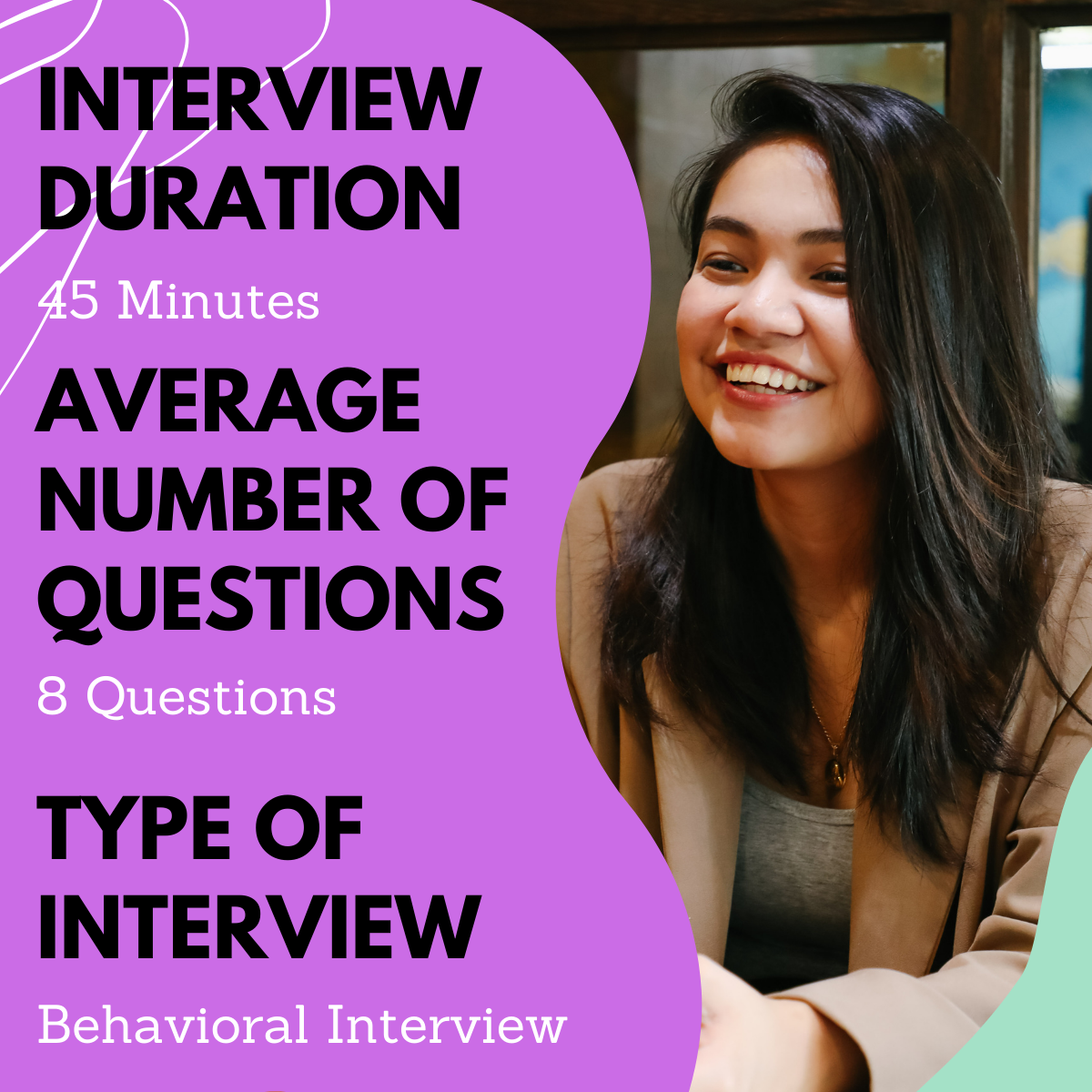
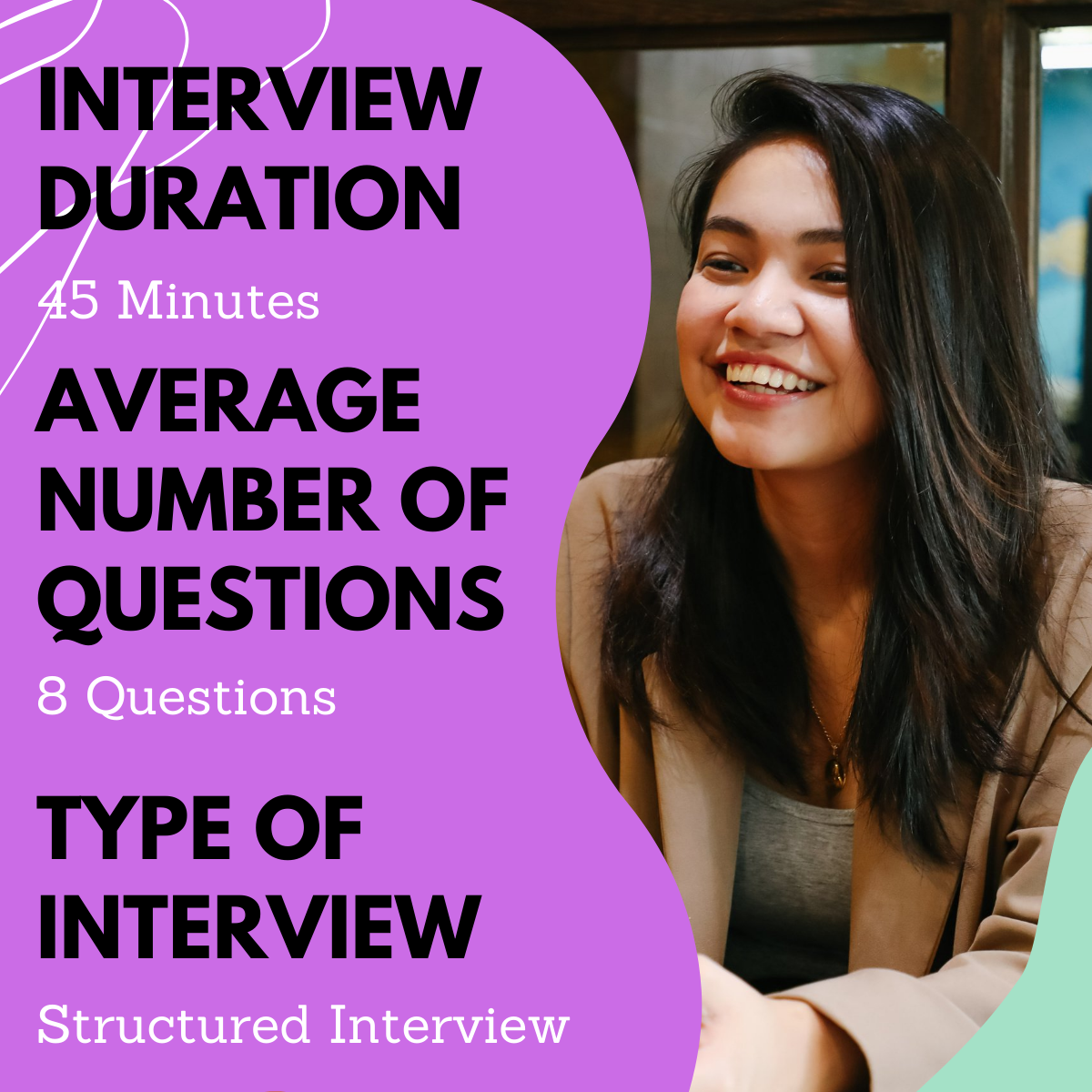
During the 45 minutes job interview the average employer will ask 6 job interview questions – often behavioural interview questions (question based on past experiences – “give me an example of doing A”)
The initial question commonly asked is: “tell me about yourself” An easy question to ask, and the final question is “Do you have any questions for us?”
Knowing the structure of the job interview reduces the candidate’s anxiety levels. Lower levels of anxiety increase performance confidence, allowing an interviewee to produce more detailed job interview examples relevant to the job interview question.
Employers will hint towards the job interview questions by sharing the essential criteria of the job role. It is the main duties or essential criteria that is referenced in the job interview questions. This insight can help a job seeker prepare high-scoring interview answers and examples prior to the job interview.
Fear creates procrastination. As a high number of people fear the job interview it is unlikely that each candidate will complete the essential preparation before a recruitment process. If for example only 50% of candidates fully prepare, including yourself, that is only 2 other applicants who are confident enough to give good job interview answers.
From 250 initial applicants, only 3 of the 6 interviewees will be interview ready. This means you only need to give higher scoring answers then the two other prepared people.
A job interview is one of most stressful situations you can put yourself in.
This is because, most people, fear being the center of attention.
It is the fear of being rejected by the hiring manager that creates stress and anxiety. Job interview stress changes the candidate’s behavior which in turn creates a weak interview identity. Answers are weak, lacking detail and filled with an excessive number of filler words and weak language.
This article will explain how to handle job interview stress to create a strong interview identity that results in job offers.
Is a job interview a stressful situation?
Stress happens:
When we experience something new
When something unexpected happens
When we feel we have little control over something
All three stress activators can happen during a job interview. On the other hand, a well prepared career professional will feel confident if they:
Carry mock interviews and/or attend public speaking training – this reduces the ‘something new’ fear
Understanding the job interview process – this helps overcome the ‘unexpected’ fear
Humans are confident in familiar situations. Routine, processes, the norm, are all things that reduce stress. This is why some career professionals who are unhappy at work don’t search for a new job. The fear or something new outweighs the fear of the staying in an unhappy job role.
Do Employers Make the Job Interview Stressful on Purpose?
The myth that all job interviews are difficult, with employers asking awkward curveball questions designed to increase pressure on the applicant is just that – a myth.
Employers may asked: ‘how do you handle stress?’ for stressful positions, or ask problem solving riddles in engineering, IT or mathematical roles but for most advertised vacancies each job interview question will be based on the essential criteria for the job role.
In fact, employers will go out of there way to make the interview an ‘enjoyable’ or at least informative. Think about it, a recruitment manager is looking to hire the best person for the role.
All employers know that job seekers will be attending several job interviews over a short period of time, often with a rival company. It is in the employers interest to hire the best applicant.
If the employer did created an unnecessary pressurized job interview environment it is quiet likely that the 1st choice candidate will take the job offer with another, more friendlier’ employer.
Most employers use a ‘structured job interview’ process, by familiarizing yourself with this process will help you feel more in control and less stressed.
Reduce Job Interview Stress
Some well known basic stress reducers include:
Drink water
Eat healthy
Regular exercise
Learn to say ‘no’ as this increases assertiveness
List your skills and talents as positive reflection increases confidence
Use deep breathing or mindfulness to feel more calm and in control
Use a blackout curtains and a soundless room (no mobile phones, etc) to get a good nights sleep
Negative self-talk
Remove negative self-talk.
‘I’m not good enough’
‘Others are better skilled then I am?
‘I don’t have the relevant experience’
What you focus on you feel.
If you focus on negative statements you will feel negative. Instead focus on your strengths your skills, qualities and what you have to offer the new employer – your unique selling point.
Make a list of your key skill set
Reflect and record key experiences where your ideas, hard work or leadership resulted in a positive outcome
Re-read past appraisals and focus on what a previous manager liked about you
Perception
Perception creates or reduces the power balance.
Viewing the job interview as a life or death situation increases the body’s flight or fight response.
Breakdown what a job interview is. At the bottom level, the interview is you talking about you. And you are the expert on you!
View the interview as a meeting where you are teaching other people about what you have learnt; your knowledge, your experiences, and the techniques you have picked up to get a job done.
Reframing a job interview changes the perceived power balance. Being stress makes you feel you have no power, no influence. Feeling confident about talking about you makes you feel powerful, invincible.
Interview Questions and Answers
Repetition is the key to mastering a skill and practice creates perfection.
The more job interviews you attend (or mock interviews) the more confident you will be as an interveiwee.
This is true with any task. To be a good tennis player, play more tennis. Master chefing by cooking on a regular basis. Learn to speak a second language practice, make mistakes, and learn.
There has been an increase in learning mentoring roles as education providers employ supportive roles to help struggling students.
In the main, learning mentors work with children, but some positions include mentoring adults. Other vacancies are for specific areas IE young offenders, SEND pupils, etc.
Employers are looking for ‘skills’ as well as experience. When giving examples, applicants need to check if the new job role is mentoring groups and/or 1-2-1s.
This article will help mentors prepare and pass a learning mentor job interview.
How competitive is a Mentor job interview?
Interview Specifics:
Can you demonstrate the relevant knowledge and experience to pass a Mentor job interview?
Discussing pupils learning needs to create a plan of action
Creating strategies and supportive actions to help increase a pupils confidence level
Working in groups or 1-2-1 to help an underperforming pupil achieve realistic educational outcomes
Understanding safe-guarding practices
Have an awareness of learning styles and techniques
Monitor and report on a pupils progression
Great questioning and listening skills
Support with transition, including report writing
Check the average pay for a Mentor job role.
Job Interview Questions and Answers for a Mentor.
In addition to a structured job interview, many high-school mentoring recruitment process also include the delivery of a presentation. To prepare for your interview presentation click here: How to deliver a job interview presentation.
This article, though, will focus on the answers to behavioral job interview questions.
Behavioral job interview questions ask for examples of passed experience. This means that giving examples is the best way to answer the job interview question.
Mentoring Job Interview Question: Tell me about your experience as a mentor?
Not all employers require the successful job applicant to have direct mentoring experience.
Instead, most employers are looking for certain skills – the ability to mentor a (specific group).
Identify the job criteria – the skills and experiences required for the mentoring job position
Be a self-promoter – giving detailed descriptions of relevant skills
Communicate with confidence – engage the interview panel with tonality, expressions and gestures, while having clear diction and a nice pace
Example interview answer:
“I have worked as a (job role) for the past (number of years) where I was responsible for (list duties).
I have undertook (list relevant qualifications) which taught me the importance of (a particular knowledge base).
The reason I am so passionate about mentoring is because (reason IE supporting/helping) An example of this is when I was working at (company) where I was mentoring (cohort). to support the client (describe mentoring technique in detail) which resulted in (positive outcome).
To summaries, I have X number of years experience and I am highly passionate and skilled at mentoring others.”
Mentoring Job Interview Question: Give me an example of mentoring a student who was underperforming?
When answering specific ‘example’ questions it is important to give context by describing the situation.
Context allows a hiring manager to understand the difficulties and actions taken.
It is also key to explain any ‘basic’ everyday tasks. A large number of interviewees don’t state ‘obvious’ duties because it is a task they complete everyday.
But, because interviewers follow use a structured job interview process, candidates must state all essential job criteria to receive full marks.
Example interview answer:
“I was working with one mentee recently who was undeforming in (subject) due to (reason). Because of this (reason) the mentee was (describe state – quite, angry, demotivated).
Because I was aware of the situation I, prior, to the mentoring session (actions took to help make the mentee more relaxed, open and feeling safe. This could also include any research undertaken)
When I met the mentee I split the session into three stages: contracting, open questions and goals. It was important to contract because of (reason).
In the mentoring section, I asked, initially very open questions, including (add questions) to help the client open up. The conversation become more specific as we built trust and talked more in-depth about underperformance. We focused mainly on (add detail).
By the end of the mentoring session I signposted to (source) and encouraged goals, including (state goals)
The result of the planning and my communication style was (describe a positive outcome for the client)”
Mentoring Job Interview Question: Tell me about a safe-guarding issue you have had to deal with?
When applying for a mentoring role that works with children’s or vulnerable people, you will be asked a safe-guarding job interview question.
Employers need to check that a mentor knows the correct procedure when a young person discloses that they are in harm.
It is important in the safeguarding interview answer to highlight a level of knowledge of safeguarding.
Employers ask for a safeguarding example, to check how the principles have been used in a real situation.
Example interview answer:
“I was mentoring one mentee who disclosed a safeguarding issue. At first the disclosure was made in passing and the mentee, aware of what they have said, tried to deflect the statement by talking about other things.
This where my excellent listening skills come into their own. I also make lots of notes when I am mentoring someone to ensure that the information I have is accurate.
I was aware that the mentee was (embarrassed/upset/angry) and initially I used (open body language/soft tonality/additional questions) to (desired outcome).
I then asked a direct question about the disclosure, this resulted in the mentee (outcome). To gain more information I then asked specific follow up questions. At this stage it was clear that their was a risk of harm to the young person. I asked the mentee to remember at the beginning of the session where I had ‘contracted’ explaining what I have to do if there is a safeguarding concern.
In that company we had to follow a strict procedure when a concern was disclosed, which included 1) informing a line manager, 2) making a social service referral and 3) completing the paperwork.
The mentee was in fact happy to be getting support, but was scared about the process and what would happen long term. To support the mentee I (action – confirmed that I would be able to be in the interview with the social worker/talk to professionals on their behalf/gave an explanation of what would happen in the way of a case study.
The long-term outcome was (state details).”
Mentoring Job Interview Question: Give me an example of successfully mentoring a group?
In the main, mentoring is delivered on a 1-2-1 basis.
Often, though, mentors will deliver group mentoring workshops.
Delivering workshops takes an additional skill. Many employers, to test the delivery styles of applicants, will request for the interviewee to deliver a short interview presentation.
In addition to the presentation, there is often an interview question about group delivery.
The focus of the interview answer should be aimed at the session impact:
Was the trainer able to engage all pupils?
Did the session fulfil the training objectives?
Did the trainer think about individual learning styles?
Example interview answer:
“As well as having (X) number of years experience mentoring in 1-2-1 situations, I am also highly experience in the delivery of groupwork.
The barrier with group engagement is the number of participants. In a 1-2-1 mentoring session, it is easy to adapt the delivery style to encourage and support the mentee.
Whereas in a group setting, it is the planning of the activity which is key. When I plan an activity I first ask about the group – do any have support needs? What are their learning styles? have they volunteered to attend the session?
To plan the session in full, i think about the desired outcome and how I can embed visual, audio and kinesthetic learning styles. I also think about any objections or challenges the participants may have and think of ways to overcome this.
An example of this is working with introverted pupils. As I am experienced with this, I know to ask the group a question IE anyone can answer, and then to follow by asking individuals questions to help engage the whole class.
Last week I was working with one group to help them think about (career goals, improving exam results, motivation, etc). The group was made up of (age/gender/generic barriers). To engage the group I (told stories/created a game/presented facts/played a video).
I also set individual and team tasks, and walked around the room looking for anyone who would need support.
Because I knew that (group/person) had (describe barrier) I (state actions took) which resulted in (positive outcome).”
Mentoring Job Interview Question: Tell me about a time when you have successfully mentored someone to achieve their goals?
In short a mentor will help an mentee achieve their goals.
When giving an interview answer to a 1-2-1 mentoring experience question, it is important to state the required skills used while following a mentoring model such as GROW. These include:
Listening
Communication
Empathy
Creating accountability
Encouragement
Note taking
Safe guarding awareness
Example interview answer:
“I have many examples I could use. My favorite is when I was working at (company) and I was mentoring a client who wanted to achieve (goal).
The mentee, when I first met them, was (add barriers; quite, reserved, extravert, demotivated, scared) This was because of their (describe situation).
My first task was to establish rapport, I did this by (sharing stories, listening, finding commonality, not interrupting).
Once the mentee trusted me, which was reinforced by my ability to listen without interrupting, being patient and communicating of their level, I helped them establish their goals.
Initially their goal was ambiguous, which was one reason why they struggled to take action. By asking questions to gain a specific and measurable goal, the client was able to see the realism of achieving their objective.
We discussed option and I would often challenge their goal, thought process or suggestion to help them reflect on what they would need to do and achieve to feel successfully. This reflection technique was something the client hadn’t done before and the outcome was that they felt excited about their potential future.
The reason this was a real success, was due to my emotional intelligence. Because I was working with the client over a number of weeks, there were time when the client was feeling good and other times when they felt down. Having an agile approach allowed me to communicate in a way that suited the situation, increasing trust between myself and the mentee.
There were also times when we went off-topic and talked about hobbies and interest instead of the (goal), which was suitable at that time. And sometimes, when needed i would sign post to suitable agencies where the mentee could gain expert advice and support.
The outcome was that the mentee achieved (long term outcome) and short term felt (motivated/inspired/excited) helping them to take more action.“
Mentoring Job Interview Question: Do you have anything you would like to ask us?
Can you describe the duties in an average day?
What development opportunities can employees access?
Do you specialize in any particular mentoring areas?
Are you looking to expand the business?
How would you describe the culture of the company?
What, would you say, is the management style of the company?
How is the mentoring project funded? Do you see nay future risk to funding?
Customer service manager job roles vary across a wide range of industries. Depending on the company the job title may differ:
Customer service manager
Customer care manager
Customer relationship manager
In all customer service managerial role the main duties are similar; providing a customer focused service to exceed standards that results in an increase in customer loyalty.
In recent years, the role has evolved into customer service in the virtual world as well as physical customers.
A large part of the job role is to:
Develop and implement customer service policies and procedures
Use data to measure customer satisfaction, needs and sales
Improve the overall customer journey
Increase online positive reviews
Manage a customer service team and/or collaborate with senior stakeholders
The job interview has a large focus on understanding the applicants approach and previous experience in excelling in improving customer service,
How competitive is a Customer Service Manager job interview?
Interview Specifics:
Can you demonstrate the relevant knowledge and experience to pass a Customer Service Manager job interview?
Create a customer service process and procedure for business as usual tasks
Lead on new customer service initiatives and project lead on customer service strategies
Investigate and solve customers’ problems, which can include online negative reviews
Authorise refunds or compensation to customers as required
Analyse customer data and statistics to be used in project planning
Develop customer relationship building activities
Write detailed reports
develop feedback or complaints procedures for customers to use
Staff recruitment and management
Check the average pay for a Customer Service Manager job role.
Job Interview Questions and Answers for a Customer Service Manager.
Generally speaking, customer service managers for medium sized organizations will be invited to one structured job interview.
Senior managers overseeing customer service at a strategic level are likely to attend an average of three job interviews including a structured job interview, a strength-based interview and an assessment.
This article will cover the commonly asked interview questions for a customer service manager in a structured job interview.
Tell me about your experience in customer service management?
The initial job interview question is designed to check suitability – does the applicant meet the job criteria?
Opening questions are also generic, to help the interviewee to speak with a view that they will be more relaxed when asked specific job criteria questions later in the interview process.
A savvy candidate can use the opening question to help create intrigue by stating their unique selling points.
Interview Answer Template
“I am highly skilled in customer service management for roles. For the past (number of years) I have been responsible for (add job-related duty). This included (A, B, and C – give detail).
I possess a qualification in (add sector-related qualification) which taught me the importance of (sector-related model or theory), an example of using this in day-to-day tasks is when (add example).
My main strengths include (add unique selling point). To conclude, I am a skilled customer service manager with over X number of years experience, qualified to X level.”
Give me an example of how you would implement a customer service policy?
As one of the main job duties of a customer service manager, explaining the process what implementing a customer service policy is one of the key job interview questions.
The ‘policy’ question must be answered by using the interview answer model – ME (Model and Example).
The model and example interview formula is highly powerful when it comes to technical job interview questions.
By stating the model, in a step-by-step process, all elements of setting up a customer service policy will be discussed analytically, ensuring that all the job criteria on the interview scorecard is referenced.
The power of emotions is the reason why a logical answer alone isn’t enough. Once a step-by-step process has been explained, a real-life example must follow.
Interview Answer Template
“Policy creation and implementation is one of my key strengths. The five steps for creating a policy are, 1. identify the need for the policy, 2. gather data to support the creation of the policy, 3. involve stakeholders and draft policy, 4. gain approval for senior managers, 5. implement policy.
An example of creating and implementing a policy is when I worked at X company. At the time (explain barrier/problem). To help define the policy I (searched for data) which helped to create a policy that embedded (a particular requirement). Also, I worked with (stakeholder) as they had a vested interest in the policy outcome. After the policy was approved by (manager/board) I created an implementation plan which included (actions with reasons).”
Describe your managerial style?
There are various management and leadership styles. In the main, most managers have a natural preference for one or two management styles.
Often employers are looking to hire managers who possess the management style that fits within the culture of their organisation.
A safe way to answer the management style question is by explaining how you choose your management style based on the situation.
Interview Answer Template
“Situational leadership theory explains there are four key leadership styles; directing, coaching, supporting, and delegating. All managers have a natural tendency to prefer one style due to their temperament.
What an experienced customer service manager, such as I am, must do is choose the most suitable leadership style for each individual situation.
As an example, my natural preference is (name a leadership style). This is ideal when (state situation) but isn’t as useful in (second situation). In this situation, I would use (second leadership style).
I think one of the reasons for my successful career as a customer service manager, is my ability to manage tasks by reflecting on the situation, the project timeframe, and the skills of my team.”
How do you review customer standards within an organisation?
New customer service policies, processes, and strategic plans must be based on data.
Employers will check that a customer service manager makes logical decisions to create change through the analysis of data.
Customer service data can be gained from very sources:
Surveys
The number of customer complaints
Monitoring social media
Online reviews
Increase or redcutaion in footfall/sales
The customer service answer is best answered using the STAR method.
The STAR method uses an example to show the candidate’s level of competencies.
STAR stands for Situation, Task, Actions, and Results.
Interview Answer Template
Situation – start the interview answer (the example) by describing in a few lines the situation that the company was facing.
“While working as a customer service manager at (company name) we analysed data that compared (a good vs bad customer service outcome)
Task – The task part of the STAR method should state the specific required task. The task is different from the situation (many interviewees miss the task section of the STAR method). The situation is the big picture, whereas the task is the specific plan the team/employee was required to complete
The data showed how we needed to (improve customer service outcomes). To achieve this, I was responsible for (describe task)
Action – Each stage of the STAR job interview method is more specific then the previous one. In the action section, the interviewee needs to explain what is was the did to help bring around a positive outcome.
The action segment is the crux of the job interview answer. The employer isn’t interested in what the team did or a generic cover-all description. Instead, the hiring manager wants data that they can cross-reference against the job criteria.
Specific information can be measured.
To ensure that the best action was achieved I first spent some time planning. There were two possible actions I could take, the first was X and the second Y. The advantage of doing X was (add detail) but the dis-advantage was (add detail). Whereas the disadvantage for Y was (give detail), put the pro’s included (give detail)
I choose (X or Y) because (reason). To start, I first (describe initial actions) as this (add outcome from initial actions). Next, I (describe actions) which helped achieve (outcome). Throughout the task I reviewed my actions to ensure that the task would be completed to the highest quality. Finally, I (add action).
Result – To end the STAR interview formula, the interviewee must state the result or outcome from the action described.
The result should be a positive outcome that helped achieved a particular goal.
My planning, reviewing and my ability to (describe a positive trait) ensured that we were able to (positive outcome) which had a massive effect on (part of the business)
Give an example of helping an underperforming employee to be more successful?
A large part of a customer service manager job role is the managing of staff.
Most questions, relating to performance, are framed as a ‘support’ question.
It is important to talk about a process for managing underperforming staff and to give an example. Again, this question is best answered using the ME – model and example formula.
Interview Answer Template
Not all underperforming staff members underperform for the same reason. As an example if a staff member was previously one of the best performing employees and only recently started to underperform, this maybe an indication that something may have effected that persons motivation or stress.
Compare that employee to a staff member who has underperformed no matter part of the business they are working with.
Generally speaking, if an employee has started to underperform whereas the rest of team is performing well, indicating that the underperforming employee needs support tor motivating I following the three stages that most HR teams embed in their policies: review, training, disciplinary,
The initial stage is bringing the underperformance to the team members awareness, asking, in a 1-2-1 what support they need from myself? This is an informal discussion, that can lead to some actions being agreed.
If performance doesn’t improve, the next meeting is formal with an action plan being created. The action plan can include training, mentoring, work shadowing and a list of priorities action for the employ. The idea is that following the plan will naturally improve performance. The main discussion should challenge the employee to help understand the reason behind the underperformance.
Finally, if performance still hasn’t improved over the duration set out in the action plan, then a more formal meeting will be had that involves the HR team. In short, as a manager i would try to do what I can to support an employee until it is required for HR to get involved.
Do You Have Any Questions for the Interview Panel?
What areas is the business looking to expand into?
What development opportunities are available to new staff members?
What is the company’s biggest barrier to achieving its KPIs?
Who would you say is the company’s biggest competitor?
How would you describe the culture of the company?
Data has highlighted how today’s workforce isn’t scared of job-hopping, leading to employers having to constantly recruit new staff.
An increase in advertising the same job roles, time and time again, has resulted in a shortening of the recruitment process with hiring managers looking to streamline procedures, but some employers still enforce a 4-6 stage job interview process.
Employees are willing to quit their jobs
In a recent article on MRI Network, talking about the cost of a slow recruitment process, shared staggering HR statistics: “25 percent of people quit their jobs in 2021; 65 percent are currently seeking out new opportunities.”
A Gallop post, sharing statistics from a report, back-up’s the job-hopping data: “21% of millennials say they’ve changed jobs within the past year, which is more than three times the number of non-millennials who report the same.”
In the same post, it goes on to explain how 50% of millennials believe they will switch employers within a 12-month period.
The job sector the advertised job role is in, as well as the demand for a career professionals skill-set, experience, and qualifications, impacts the likelihood of an employer recruiting a long-lasting suitable employee. The MRI Network article explains: “In any market, first-choice candidates always tend to disappear quickly, as they have multiple options to pursue.”
First-choice applicants are interviewees who can communicate their competencies confidently, creating a strong ‘interview identity.’
Long vs short recruitment processes
Even with a need to hire staff quickly to fill the gaps left by job-hoppers, some employers embed long recruitment processes.
On a list of HR facts in a Zoom Shift HR Stats article, they explain how: “60% of applicants quit filling out application forms due to complexity or length. (SHRM)”
The MRI article talking about ‘slow hiring’ says: “These days, employers need to act quickly and decisively, particularly when candidates are currently employed or need to relocate.”
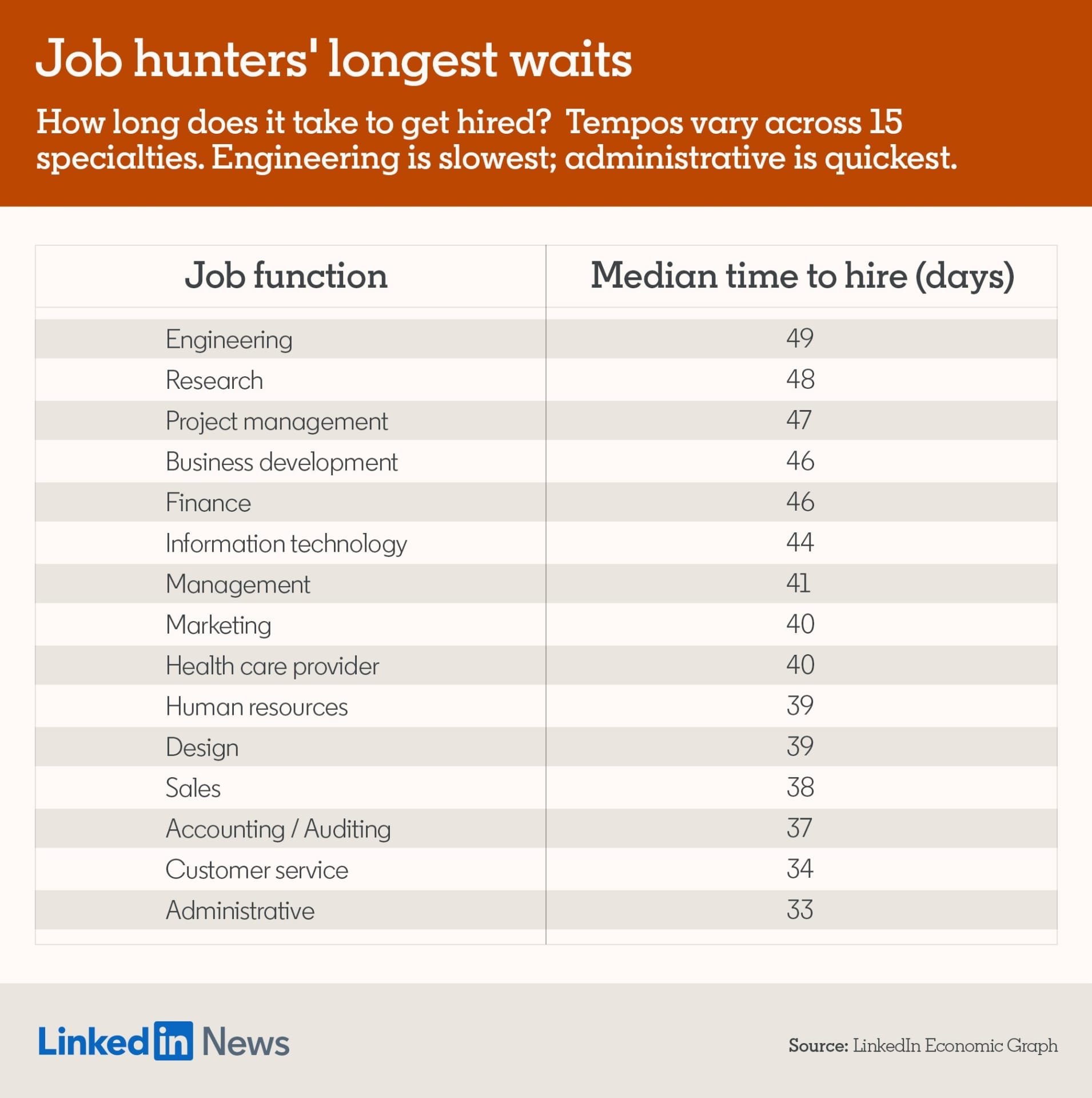
Recruitment processes vary by sector. A detailed study, by Linkedin, of over 400,000 confirmed hires between 2020-2021 shows the duration of hiring times:
The graph shows how industries that value ‘precision’ have a longer recruitment process. But why? The Linkedin article explains: “Companies in the tech industry tend to value precision — sometimes false precision — over speed…. can mean putting candidates through endless technical interviews, assessing deep textbook knowledge that’s far beyond what jobs may require.”
Demand drives change
Some organisations have a higher number of applicants than others.
If a high number of career professionals seek to work at a particular company, that organisation can have a longer recruitment process without the worry of missing out on first-choice applicants.
In a Glassdoor article they explain: “On average, each corporate job opening attracts 250 résumés. Of these candidates, four to six will be called for an interview and only one will be offered a job.”
A recent press releasehighlighted the high number of applicants for global brands: “1 million people applied for a job at Amazon as part of Career Day 2021”
An advice article about getting a job at Google on the Independent shared eye-opening Google recruitment stats: “Google receives more than three million applications a year and hires just 7,000 people”
The automated job process
The extreme number of job applicants has resulted in HR teams utilizing artificial intelligence robots to screen applicants and to act as job interviewers.
An HR research report from 2020 started: “a third (of HR teams) – 33% anticipate high or very high use of AI in two years.” Whereas other information shows how the pandemic has already created a faster move towards the use of asynchronous video interviews.
Algorithms have a cost-saving advantage over humans, as the AI bot is able to scan a higher number of applications per day than a human HR staff member.
Chris Delaney is one of the leading job interview coaches in the country, helping career professionals to successfully pass job interviews. Delaney is the author of several job interview reference books including ‘what is your interview identity’
An asynchronous video interview (AVI) is a job interview conducted by a computer algorithm.
In an AVI, the interviewee is filmed answering a set of pre-determined interview questions. Each interview answer must last between one or two minutes. Post two minutes and the video recording ends, even when the job applicant is halfway through their interview answer.
Never heard of an asynchronous video interview? You soon will!
AVI’s have been around for a while.
In a BBC article, they explained how some industries have already tested AVI’s prior to the recent increase in common usage: “AVIs were being used as the first stage of recruitment in the healthcare, pharmaceutical, tech, business and finance sectors..”
In 2012, around 10% of ‘top positioned’ businesses used any type of video interviewing. An article in the Financial Times by Sarah O’Connor, talking about the impact of AVI’s, said that: “Of those employers using video interviews in the UK in 2019/20, 46 percent were doing them with an interviewer, 30 percent were using automated video interviews and 24 percent were using a mix of both, according to the Institute of Student Employers.”
A poll of 334 HR leaders by Gartner found that covid increases the usage of AVI’s with 86% of organizations incorporating new virtual technology to interview candidates.
Artificial intelligence being used in the recruitment process is nothing new
Large organisations have been using Application Tracking Systems (ATS) to shift through candidates’ application forms for many years.
In a Slate article, they explain how AI is embedded into the recruitment system: “Artificial intelligence has played a growing role in recruiting and hiring for some time, as both a timesaver and a matchmaker. A.I. has been used to generate job descriptions, to post and share jobs, to automate candidate searches, and to scan résumés and cover letters..”
Mid to large companies use ATS if they receive a high number of applications for multiple job positions. AI can sort the weak from the strong, the unsuitable from the suitable, a lot quicker than a human can. ATS mainly makes decisions based on keywords embedded throughout the application form.
Recent research by JobScan found that“at least 494 Fortune 500 companies use an ATS, we were able to identify the exact ATS for 482 of them. This means that 98.8% of Fortune 500 companies use an ATS”.
Artificial intelligence, from an employer’s perspective, is about saving time and money. But where does this leave the job seeker?
Which Organisation use AI Interviewers?
A high number of large companies are known to be using asynchronous video interviews, including:
PwC
Unilever
Kingfisher
Hermes
JP Morgan
Amazon
Different Trypes of Asynchronous Video Job Interviews
Understanding the platform the employer chooses to use is deemed as being highly important.
In Slates ‘should robots be conducting interviews’ article, they explain that the various algorithms used by the various programmes look at various criteria: “Like humans, these bot recruiters have their own unique styles of interviewing. Some are merely seeking logistical information, like availability and ongoing interest, while others might be looking to assess drive, initiative, team-working skills, adaptability, or even your tendency to job hop.”
The BBC go-on to explain some of the challenges when interviewed by an AI system: “There are challenges; AVIs can vary in the amount of time allotted for each answer, and not every programme will give candidates unlimited preparation time or allow them to re-record a section if they are unhappy with their first attempt”
Some robot interviewers choose candidates based on their interview answers (keywords that match the job criteria), with others reading facial expressions and the candidates tonality.
A researcher, speaking to the Mirror, shared concerns that working-class applicants could be at a disadvantage when a robotic interviewer analyze voice and tonality of a job candidate, if the working class interview doesn’t have “beautifully compiled grammar”
How to Prepare for an Asynchronous Video Job Interview?
Each job applicant should first reflect on their past job interview performances and take the interview identity test to understand how they are viewed by an employer.
Specifically for an AVI recruitment process, job applicants must:
1. Set up the interview environment and IT systems
A full guide to setting up for an online interview can be found here: Online Job Interviews.
The biggest question asked is “what happens if my internet signal drops during the asynchronous interview?”
Luckily, the designers of AVI’s have tackled this potential problem. As an applicant’s signal starts to dip, a warning indicator pops onto the screen. When the signal is lost, the interview will atomically stop and only resume once the candidate’s internet signal strength is strong.
2. Practice speaking to camera
In the online job interview article, it explains the importance of looking at the camera, not the screen, to help improve eye contact.
For systems that monitor facial expressions, feeling an emotion (excitement, joy, happiness) will automatically show on the applicant’s face.
Many applicants worry about the turnaround from entering the virtual interview room and being monitored. In most cases, an interviewee can access the AVI, take a deep breath to relax, before actually starting the interview.
In fact, many AVIs have a practice interview question to help the candidate prepare and ready themselves.
3. Predict the job interview questions and preapre answers
In advance, the employer will send details of the AVI. This will include the date/time of the interview – this is often optional over several dates.
As there are no human interviewers, the job interview isn’t on a specific time on a set date.
The career professional needs to log in, often within a seven-day period, 24hrs a day, and complete the interview at a time convenient to them.
Candidates will also be told the number of interview questions they will be asked – with the average being three questions. And the duration of the interview answer, which is often one or two minutes per answer. Sometimes this information is present once the candidate logs onto the AVI.
The three interview questions will be chosen to gain a better understanding of the job applicant’s suitability for the role. In most cases, AVI’s are used to reduce the number of applicants, which can be as many as 20,000 for global companies to a manageable number of interviewees who will be invited for a face-to-face interview with a human.
One question will be a generic question on suitability “Tell me why you are suitable for the role?” or “Tell me about yourself?” or “What can you bring to the role?”
The additional questions will be more specific, based on the key job criteria: “Give me an example of when you did X?” or “What is your experience doing X”
How do you speak to a robot interviewer?
Research shows how a nervous job applicant will self-disclose weaknesses, give shorter responses and use excessive filler words.
The key to being seen as suitable is through a confident delivery of the interview answer.
Confidence is one element that creates a strong interview identity. A job interview identity is created by a mixture of content and delivery. An employer will have a positive view of a job applicant who they perceive to have a high level of knowledge and experience and who delivers answers with confidence.
AI interviewers have built-in software to understand mispronounced words, and to understand local slang.
But the advice is to always speak clearly and to pace yourself. Talk slower than you would when naturally speaking and focus on diction.
As with a human interviewer, be self-promoting, enthusiastic (especially if the bot is monitoring your tonality), and stick to the time frame of the interview answer.
Are AVI’s here to stay?
The test results aren’t in yet.
There are many concerns around biases with AI interviewers, as they are programmed by humans and data that are filled with biases.
Many people on social media talk about how being interviewed by a robot increase job interview anxiety.
But with one large grocery chain in the U.S. using an AVI to interview about 20,000 people a day for stocker and cashier jobs, it sounds like there will be an increase in robot job interviews.
Chris Delaney is one of the leading job interview coaches in the country, helping career professionals to successfully pass job interviews. Delaney is the author of several job interview reference books including ‘what is your interview identity’
Job interview preparation is key to a successful job interview outcome.
Each job applicant should first reflect on their past job interview performances and take the interview identity test to understand how they are viewed by an employer.
Once a career professional is aware of their interview identity, the next stage is to understand the commonly asked job interview questions.
With a list of interview questions, the job applicant is then ready to write, edit and practice their interview answers using the templates below.
Interviewees must add their own stories, real-life examples, facts, and figures, plus embed industry jargon.
To pass a job interview, a successful applicant only needs to score higher than the other (on average) 6-7 interviewees.
A large list of job interview questions and answers
Each interview question will come with an explanation of how to answer the question, to help each applicant highlight the value they can offer a new employer.
Remember hiring managers are looking for a potential employee to stand out – What can you offer that others can’t? What is your industry knowledge and expertise? What personal skills would add value?
Job Interview Question:
Tell me about yourself?
The most commonly asked question during the recruitment process.
You will be asked this interview question in some form.
Give a short statement about your education, experiences, and skills relevant to the job position you are applying for.
Highlight your main strength and/or achievement and your duration in the sector and/or education
Keep each selling point brief, as you can explain each point again in more detail throughout the interview
End this answer with a reason why you’re looking for a new job
“In total, I have over X number of years experience working as a (job role). In (year) I gained a (qualification). Throughout my extensive work experience in (sector), I have (key selling point) and (second unique selling point). I have applied for this role because (company interest) and due to my passion for (job duty).”
Job Interview Question:
Why did you leave your last job?
Be positive when answering this tricky job interview question.
Stay away from any negativity or complaints about previous managers, working conditions, or colleagues.
Hiring managers like to hear that you left for a good opportunity or reason, rather than a tall tale.
Start the answer with a postive reflection on the previous workpalce
Explain what excited you about your last position
End with a (positive) reason for leaving
“I enjoyed working at (company name) as I was able to (achievement). The (aspect of the company culture) was good as this allowed me to (positive action), which resulted in (positive result). The work was exciting, as I was able to (work undertaken) which allowed me to gain (skills). It was a difficult choice to make, but I am leaving the role because (positive opportunity).”
Job Interview Question:
What experience do you have in this field?
State criteria on the job specification
Frame the answer in the positive
Relate previosu experiene to the duties of the new job role
“I have over X number of years working in this field. During my time working as a (job role) I have successfully been able to (big achievement). This is because of my ability to (skill/action). During my time in the sector, I have undertaken a number of roles/worked on projects including (name specific duties, projects, and achievements). What I can bring to your team, is the ability to (key actions and skills).”
Job Interview Question:
Do you consider yourself a successful person?
Never give a short ‘yes’ answer. And never, ever, answer with a ‘no’.
The job interview panel is looking for evidence of sector-related knowledge and experience that they can reference against the job interview scorecard.
This means that the job interview answer requires substance.
Talk about industry success, relating the answer to the job criteria.
“I am highly successful. Throughout my career I have been (involved/a leader of/part of a team) that was responsible for (overcoming a barrier/facing a job-related challenge). An example of this was when I was working at X, and I had to (actions) to help achieve an (outcome). The secret of my success is my ability to (unique selling point)”
Job Interview Question:
How would your colleagues describe you?
To make a lasting impression, use quotes rather than just stating that employees would be positive towards you.
Quotes sound more powerful, more believable.
“I’m lucky, throughout my career I have worked with some great people which helps to be successful within a task or when working on a project. My previous colleagues have always had respect for my dedication, work ethic,and (add third skill/quality). In my previous position, I was always known as (positive attribution). (Name of manager), my line manager, would often say (positive quote). In fact, this reputation has been with me throughout my career. When I was working at X, my manager there would also say (positive quote)”
Job Interview Question:
Are you applying for any other jobs?
It’s rare that a career professional only applies for one position.
In truth, once a job hunter starts searching for positions they are likely to apply for at least 10 roles.
The ‘number of other jobs’ interview question is asked to check if the applicant will have loyalty to the organization – if the applicant is only applying for this one role, they must really want to work for the organization.
So, the reality (employees applying for numerous positions) and the employers ideal (the applicant only applying for the one job role) is a mismatch.
“I have applied for a few positions. For each job I come across, I research the company to check if we could collaborate successfully together. I am always interested in (company culture/projects/reputation). I was really excited to receive the job interview offer for this position, because during my research I learned (amazing fact) about the company, which helped me realise that this is the type of company I would want to work for above all the other vacancies I successfully applied for”
Job Interview Question:
What salary are you looking for?
Prior to the job interview, in preparation for the ‘salary’ interview questions, career professionals must:
Check the salary average for the advertised role
Complete the interview identity test to understand how an employer perceives them during the recruitment process – as this affects the salary offer
Check if the position is one that high salaries can be negotiated – as for many roles, the negotiation is within a salary band, not open.
“Due to my extensive experience within the sector, where I have the (skill/experience) to (unique selling point) which can result in (financially linked selling point) as well as having (second unique selling point) I am looking for a position with a salary of (add amount)”
Job Interview Question:
How long will you stay with our organisation?
Employers spend around 33% of their profits on recruitment.
The employment duration interview question is based on the requirement to employ staff members who won’t leave after a short period of time.
What an employer is looking for here is reassurance.
“I am looking for a position within an organization that I know I can add value to. I prefer not to jump from job to job, and only take offered roles where I can see myself staying for a long period of time. I really like the sound of the (company/job role) and if I was successful I would hope to be here for many more years to come.”
Job Interview Question:
If you could, would you retire right now?
Some job interview questions do, on the face of it, sound a little random.
Successful interviewees also reflect on a potential interview question to better understand the hidden reason for the said question to be asked.
Everyone wants to retire, don’t they?
The truth is not everyone does wants to retire. In fact, for some career professionals, their job is their life.
This is what is at the bottom of the ‘retirement’ interview question. What is really being asked is – are you passionate about your chosen line of work or is it just a pay ticket?
“No, I wouldn’t retire. I am very passionate about what I do and I am especially focused on (long-term achievement). For me, a job isn’t just a salary it’s about (state passion/reasons for working in the industry).”
Answering the ‘what are you looking for in a job question?’ with salary, working near home, or any other ‘wants’ will only result in a lack of job offers.
Employers will score high interview answers that state a liking for the job criteria.
“The three key things I look for in a job are (generic criteria 1, 2 and 3). More specifically I excel in (describe company culture). Because I am skilled at X, I always work well when (state a duty/task you perform well).”
Job Interview Question:
What motivates you to be your best?
This interview question is looking at an applicant’s personal motivation.
The motivational traits must match the job criteria.
As an example, stating that you are motivated while working with others as part of a team would score high for a team role position but not when working in a job role that requires an employee to work on their own initiative.
A second way to answer the ‘motivation’ question is by focusing the answer on a vision – the same vision the company has.
“I am a highly motivated person who enjoys (sector-related outcome). I am at my best when I (job-related criteria 1, 2, and 3). What helps to keep me motivated is my personal goal to (a goal linked to the employer’s company vision).”
Job Interview Question:
Are you willing to work overtime?
The ‘overtime’ question is only asked in a recruitment process when the employer needs employees to have a flexible approach to their working hours.
If asked the overtime question, and offered the position, there will be an expectation for the applicant to work more than their standard hours.
“Yes, I am always happy to work additional hours. In my last position, we would often work overtime during busy periods such as Christmas or at the financial year-end. I understand the importance of not letting customers down, which sometimes means the team needs a flexible approach.”
Job Interview Question:
Are you happy working on a shift pattern?
Unlike the ‘overtime’ question, the shift pattern question isn’t asked as an unwritten rule that employees, once employed, will be expected to work on a shift rota.
There is a legal amount of hours an employer can force an employee to work, hence why the hiring manager checks flexibility.
If the employer only recruited shift workers, those hours would be made clear in the job advert.
The ‘shift-work question then is asked by hiring managers who recruit a large number of employees; some working shift patterns and others on a more traditional 9-5 schedule.
The question is often asked during a large recruitment drive and, in the main, doesn’t affect the hireability of the candidate.
Answers, then, should be honest.
If you are unwilling to work shift patterns let them know, and if you prefer a shift pattern (that often comes with a higher salary) then state this preference.
Even if the answer to the shift-pattern interview questions affects the likelihood of being recruited, honesty is still the best policy. If you dislike shifts and get recruited for a position that works on various shifts, it is unlikely that you would enjoy the role.
“I read that the role might include shift work and I am very happy to work on a shift-rota”
Job Interview Question:
Are you willing to relocate?
When an employer requires you to relocate, they would have stated this in the job specification so the questions shouldn’t come as any real surprise.
What is sometimes not clear is the location or locations where the job role may be.
“The idea of relocating is one of the elements that drew me to this role. I researched the (location) and I am really excited about the idea of living there. To help me decide whether or not to apply for the role I undertook some research to check things like house prices, crime levels, and general living conditions – did you know that (share positive fact about location)?”
Job Interview Question:
Are you willing to put the interest of the organisation ahead of yours?
Hard-hitting job interview questions are, in the main, only asked for high-paid and high-skilled job roles.
For this level of employment, hiring managers need a career professional who will go above and beyond, an employee who isn’t just applying because they need a salary.
High-level positions will require decisive action when problems occur. During a big crisis, for example, a company-level hack, the IT project manager would be expected to come back from leave to help solve the problem.
“Of course, at this level, it is important to hire someone who has the company interest at heart. When I work for an organization, I give it my all. As an example, while working at X a (problem) occurred. At the time I was (on holiday or other situational problem) but due to the urgency and risk of the (problem) I (actions taken). My actions and my commitment to the company interest resulted in a (positive outcome).”
Job Interview Question:
Describe yourself as a person?
This question is perfect for rule two of a successful job interview; be a self-promoter.
First, think about the job specification, the duties you will perform, and the culture of the organisation.
When selling yourself, talk only about the skills and qualities you have that are relevant for the advertised position.
“I am a (quality) (quality) and (quality) individual who specialises in (skill). When working on (sector-related task) I am able to (achievement) due to my (skill/quality). Colleagues and stakeholders describe as (quality) due to my ability to (achievement). My key strength is my ability to (skill/achievement) which I achieve due to (skill/quality).”
Job Interview Question:
What is your philosophy for working?
A career or working philosophy is similar to an organisations mission.
A one-line that accomplishes who you are and what you want to achieve in your career.
Think of the philosophy, as a career identity.
Don’t be tempted to give a deep long answer here, keep it short, sweet, and positive;
“I would say my work philosophy is (add selling line, as an example – completing tasks on time and to a high standard”
Job Interview Question:
Would you say that you are overqualified for this position?
Why are hiring managers concerned about an applicant’s level of qualification?
The truth is, one of the elements of the hiring decision is the likelihood of the duration of the candidate’s time employed within the organisation.
A high-level qualification in a specific field is generalized as the applicant, ideally, wanting a job in the sector related to their degree.
This means, from the employer’s perspective, if the highly qualified applicant is offered the advertised role, they are likely to hand in their notice within the year, leaving the employer to re-recruit.
The interview answer, therefore, must reassure the interview panel that the applicant is passionate about role/job sector/company.
“No, not at all. My qualification is in a completely different field. This was a sector I was previously interested in when I was a lot younger. My goal is to work as a (job role) which is why I applied for this position. My qualification did teach me (knowledge) which can be used when doing (job duty for new role). I am also thinking of undertaking a qualification in (qualification relating to new role).”
Job Interview Question:
How would you describe your work ethic?
Work ethic is becoming a key recruitment factor.
In fact, more employers are using strength-based job interview questions as part of the structured job interview.
Work ethic basically means – how hard-working are you?
The ‘work-ethic’ interview question is another opportunity for an applicant to sell themselves.
Answers with examples do well for this job interview question.
“I have always been a hard worker. When I am working on a task I put my all into it, as I enjoy seeing the end result from my hard work. As well as meeting deadlines and targets, the quality of my work is also important to me. I always ensure that tasks are completed to the best of my ability and I never take shortcuts that would risk the quality of my work. An example of my work ethic is (give example).
Job Interview Question:
What do you enjoy doing outside of work?
An applicant’s character can be an indication of their work ethic.
The ‘what do you enjoy doing outside of work?’ question is a sneaky way of asking about a person’s characteristics.
Common mistakes when replying to this interview question, include saying:
Socialising with friends
Nothing really
Watching TV
Bars and clubs
On the web
When answering the question, focus on areas of your life that highlight skills, qualities, and work ethic. This could include:
Volunteering
Having a side hustle business
Self-published author
Fundraising
Being a carer
What is important is to detail the skills, knowledge, or experience gained from the task that can be of use to the new employer.
“I currently do X. What I like about this role, is that I have gained (skills/qualities) which would be of use when performing (task). For the last X number of years, I have also been involved in X which has taught me the value of (skill/quality). While doing X I was praised for (skill) and was lucky enough to gain a (qualification in X).”
Job Interview Question:
Why did you apply for this position?
The interview answer to the ‘why this role?’ question can be split into two sections.
First, talk about your passion for the job sector/job role and how this is part of your long-term career objective.
Second, explain why you want to work for their organisation. Make this personal – you don’t just want any job, you want a job with (employer).
“My career goal has always been to work in (sector). For the past X years,I have been working as a (job role) gaining (skills and experiences). During this time I have gained (sector-related qualifications) that have given me the knowledge to (job duty). As a highly skilled and experienced (job role) I am able to (future achievement). I applied for this particular role because I have always wanted to work for an organisation that (describe company culture, projects the company works on, or the company’s mission and vision).”
Job Interview Question:
Where do you see yourself in 5 years time?
Employer requirements, for a new member of staff, vary depending on the size of the organisation, the industry the employer is involved in, and the type of job being advertised.
Some employers will look for an employee who will grow and be promoted within the company, while others need a skilled applicant who will work long-term in the one role. One employer may require an innovative individual, while a second needs someone who will follow strict processes and procedures.
The answer to the ‘5 years time’ question will vary depending on the above criteria. This is why rule 1 of a successful job interview is, identify the job criteria. As knowing what is important to the employer will assist in the decision of what to reference during the interview.
In all cases, the employer is wanting to hear that the candidate is wanting to stay within their organsiation.
“Before applying for the position I researched your company and found that (state three things you like about the organisation). It was the company’s (reference something from the company’s values/mission) that inspired me to apply because I am also motivated by (reference the value/mission). As I am passionate about (job role) and I feel this company is the perfect fit for myself, I can see myself working here, successfully collaborating with yourself to achieve (outcome).”
Skill related job interview questions
Employers will ask a number of ‘skill’ related job interview questions to understand how competent the potential employee will be once employed.
Job Interview Question:
Are you a good team member?
Team member interview questions are asked in a high number of job interviews.
Even for roles where, in the main, the employee works alone. In this situation, the employer is looking for a ‘big picture’ understanding – how the various departments are part of a larger team.
Most commonly, the teamwork question is asked to applicants who are applying for a team role.
“In all my previous roles I have worked as part of a team. I enjoy teamwork as collectively the team has a wider range of skills and experiences that they can bring to a project. Within a team, I often take the role of a (add role) as I am able to (actions) that help the team to achieve an objective. When need I can (2nd team role). As an example when working in a team to achieve (outcome) we faced (problem) and I (state actions took) which resulted in (outcome).”
Job Interview Question:
Why should we hire you?
For every advertised role, around 6-8 applicants are interviewed.
Each applicant has the skills and/or experience for the advertised role. The ‘why should we hire you?’ interview question, is really asking ‘why should we hire you and not one of the other interviewees?’
To pass a job interview, an applicant only needs to score higher – be seen as more employable, than the other 6-7 interviewees.
To answer this interview question, highlight your unique selling points.
“By hiring me you will gain an employee who has extensive success of (achievement). In addition,I have a proven track record of (A and B). As an employee, I am (add a list of qualities). But the main reason why you should hire me is because of my ability to (unique selling point).”
Job Interview Question:
Why did you leave your last job?
Many hiring managers believe that past behaviors predict future actions.
Employers request the reason for leaving a past employer, to compare the answer to their own company culture.
In addition, many hiring managers will review the number of positions an applicant has held over a small number of years.
The frame of the interview answer must be positive. Avoid, at all cost, any criticism of past employers.
“I enjoyed my time at X company. While working there as a (job role) I was involved in (projects) which gave me experience in (duties). Throughout my time there, I have gained a variety of skills, including A, B, and C. I am now in the position to use this collective experience in another role, which is why I am here today applying for the position of (job role).”
Job Interview Question:
In what way would you be an asset to us?
The ‘asset’ question allows an applicant to discuss any unique selling points not already covered throughout the recruitment process.
For the ‘asset’ question give a look forward – draw a picture of you succeeding in the workplace.
“As someone who is skilled at X, I know that we would work well together. As an example. If you imagine me working for you in 3 months’ time on a (project). I would first (state actions) as this would (state benefit). Then to gain a (positive outcome) I would use my (skill/knowledge/contacts) to gain (outcome). Finally, when ending a (project) I would (action) to help any future tasks.”
Job Interview Question:
Tell me about a suggestion you have made?
Many of the interview questions asked during the recruitment process, give an insight into the culture of the company.
As an example, some industries are process-driven whereas others are more creative.
The ‘suggestion’ questions indicate that the employer is looking for solution-focused and innovative employees who can see the ‘big picture’.
“There have been a couple of times that I have made I suggestions to (overcome a problem) that have been taken up by the company. An example of this is when I was a (job role) at (organisation). One of the problems we faced was (problem) At first the company tried to (action) but this only resulted in (very little change). Due to my (knowledge/experience), I knew that (potential solution) would work, I suggested this and created a plan of action/project plan which resulted in (positive outcome).”
Job Interview Question:
Do your co-workers ever irritate you?
The frame of the interview question can easily influence the job applicant to answer with a negative answer.
Instead, re-frame the interview answer by focusing on how you work well with colleagues.
“I am a people person, so generally I get on well with everyone. As a professional with X number of years experience in (industry),I have worked with a variety of colleagues and stakeholders. The experience has helped me to understand the various personalities people have, and how their temperament makes people react in a different way to the same challenge. This knowledge of people’s personalities helps me to build rapport with others.”
Job Interview Question:
What makes a successful manager?
This is a management role question, but the question is asked across all job roles – with the hiring manager replacing the job title at the end of the question.
Answer the question by discussing the skills the (position) requires and the criteria on the job specification.
End with an example of you being successful.
“There 3 key skills that make a good (job role). this first is A, the second B, and the third C. A (job role) task is to (main objective). By doing (A, B, and C) a (job role) will be successful. An example of me being successful is when I was working at (company name) and I had (task). To ensure a good result I (took action) which had a (positive outcome).”
Job Interview Question:
What are your strengths?
The ‘strength’ question is one of the most commonly asked job interview questions.
The openness of this interview questions gives the candidate the opportunity to talk about their unique selling point.
When creating an interview answer, the interviewee should think about the job criteria, the main skills and strengths required for the job role, and any additional information that makes them stand out from the crowd.
“I have been told by my previous manager that I am highly skilled at (task). But when I reflect on my key strengths, two come to mind. My first strength is my ability to (task). When working on (task) my (skill) and (quality) ensure (a positive result). My second strength is related to (job duty). I have always been skilled at (skill) which helps when I (task).”
In the main, a job applicant will fall into the trap of listing several weaknesses or areas of development.
A focus on negatives will only result in a low-scoring answer, or at worse the employer believing the applicant is unsuitable for the advertised position.
What the ‘weakness’ interview question is really asking is, ‘how do you develop yourself?’
“Everyone has areas of development. What is important, is to be able to reflect on the actions taken for previous projects and then review weaknesses and learning needs. As an example, when working at (company name) my team’s task was to (add detail). After completing this task I realised that I need to improve (knowledge/skill) so I undertook (training/research/mentoring)to develop this (skill/knowledge). Whenever I recognize a professional development need, I always take action to resolve this, as I am keen to become the best (job role) I can be.”
Job Interview Question:
What is your dream job?
A common reply to the ‘dream job’ interview question is: ‘This job!’.
Employers hate this type of interview answer as it comes across as trying to please. And, it is something a dishonest interview identity is likely to say
What a hiring manager is really trying to uncover, with this interview question, is the specific reasons for applying for a job in the employer’s industry.
“What is important for me in a career is the chance to (achieve vision). I really enjoy roles where I can (job criteria) and (job criteria). In all my previous roles I have been drawn to positions that (job criteria), as this meets with my (skillset/values/mission). “
Job Interview Question:
What would a past employer say about you?
Hiring managers use the ‘past employer’ question to catch an applicant out, depending on their previous working relationships.
For a future employee who only has praise from previous managers, this great becomes an excellent ‘selling’ answer.
“They would want me to come back! All my previous employers hold me in high esteem. This is because of my ability to (complete tasks), as well as my (personal skill) and (work attitude). I remember in my exit interview with my last employer, they said (add positive quote).”
Job Interview Question:
If you were the interviewer, what type of person would you look for?
Describe yourself, without making it too obvious.
When talking about personal skills and experiences, make these relevant to the job criteria.
“As the main objective of this role is to X, the ideal applicant would need to have experience in X and be highly knowledgeable on (subject). As well I possessing this industry knowhow, I would look to hire someone with (personal skills and qualities) to ensure the team collaborated successfully together.”
Knowledge and Competencies Interview Questions
Industry knowledge and experience are one of two axes that create each of the sixteen interview identities.
To be seen as being employable, each candidate must highlight a high level of knowledge around the job role.
A hiring manager only knows about the candidate, what they have been told by the candidate.
Job Interview Question:
What do you know about this organisation?
Research is key prior to preparing for the job interview, especially when asked the ‘about us’ interview question.
Research the company and become knowledgeable about the following criteria:
The duration the organisation has been in business
Why the company was formed
Thier vison and mission
What services/products the company offers
Future projects or collaberations
“The reason I applied for this role in the first place was due to your (vision) and this is in line with what I want to achieve as part of my career. What I also like about the company is that it was formed because of (reason) and is now successfully in its (year) of operation. You have a reputation for being (positive trait) and for (second positive trait).”
Job Interview Question:
Why do you want to work here?
Stand out from the crowd, by using the research gained from the ‘about us’ question to state an answer to show a real understanding of the company.
“As a career professional, I’m not just applying for any job. I am only attending interviews for a position in an organisation that I can see myself succeeding in. I choose (company name) because I follow your company and I know, from my research, that long-term you want to (long term business objective). The barrier you will face will be (state problems to objective). My skills and experience in (job sector/role) will help you to achieveyour objective by (state knowledge and experience you can bring to the team).”
Job Interview Question:
What have you done to improve yourself over the last 12 months?
Globalisation, technology, customer demand, and artificial intelligence, and big-data are rapidly changing the career market and business operational strategies.
Employers, therefore, require employees who are willing and proactive in their continuous professional development.
“I am constantly reflecting on my work, skills, and knowledge and looking at ways to develop myself, both professionally and personally. Over the last 12 months, I have undertaken several development opportunities. The first was (work-related CPD) this taught me the importance of (learning). The second was to help me with (personal skill) as I know this skill is highly important when (job duty) and the third was (knowledge related CPD) which has allowed me to understand why (potential barrier).”
Job Interview Question:
Do you know anyone who works here?
Association plays a big part in this answer. At a basic level, the min takes short-cuts and jumps to conclusions.
The employers ask this interview question because by knowing another employee you will have a better understanding of the job role and company culture, meaning that you are happy with the working conditions.
But by referencing you know an employee, who has a strong work-ethic reputation, the positive association from the employee you know is transferred to you the applicant.
“I know (name) who works in (department). He worked on (project/team) for the last (number of years)He explained the company culture, the vision of the organisation and how you (selling point). He made me excited about wanting to apply for a job here.”
Job Interview Question:
Have you ever had to fire anyone?
This management interview question is just one of several job interview questions that is asking for a specific experience. In all job roles, across all job sectors, job applicants will be asked for examples of how they can complete or have completed various job duties.
Examples are best used here. Or an explanation of the steps you would take to complete the task.
“While working at (company) one of my team was constantly not meeting her targets. To support staff member I (actions taken) and work closely with the staff member to (improve). Over several months I supported the staff member and did notice a slight improvement but nowhere near the average number of (sales/referrals/etc). At this stage, it was the company procedure to implement their warning process which included a creation of an action plan, regular meetings, and (any other requirement).
In the end, we felt we had done all we could to support the member of staff and in the end had to let her go. The member of staff actually agreed this was the best choice and thank us for all the support over the last several months”
Job Interview Question:
Have you ever been asked to leave a position?
As employers can request references, it is important to be truthful here.
This type of interview question is asked during an informal job interview and can come out of the blue. So be ready.
If you have never been asked to leave a previous position, simply say: “No, never”
If you have been in a situation where you were asked to leave the organsiation, answer with:
“X number of years ago, I was asked if I would like to leave the job role. It was a (make the job seem less important: part-time job, my first job after leaving school, a secondary job). The position didn’t suit as I am a (add skills relevant to the new position) and the company focused on (add a re-frame IE quantity over quality).”
Job Interview Question:
What kind of person would you refuse to work with?
Interview questions that talk about other staff members are designed to uncover if the applicant would fit in well with the current team and the culture of the company.
“As a people person, I always get on well with everyone I meet. Throughout my career, I have worked successfully with people who have different experiences, knowledge, and personalities. So I am happy to work with most people. Obviously, I prefer not to work with someone who is lazy or demotivated, But sometimes my personality actually motivates colleagues to work harder.”
Job Interview Question:
Have you ever had a problem with a supervisor?
This question must be answered positively to have any chance of being offered the job role.
“No never. Communication is key for a good working relationship with a supervisor or manager. If there is any negativity in the workplace I can quickly resolve this by having a conversation and looking at what we can do together to overcome any problems.”
Job Interview Question:
How do you approach a project?
Project approach questions are asked in job interviews for all types of positions, not just project management roles.
When answering the question, state a step-by-step process that the applicant utilises.
“The first step is to review the (project brief/task objective). I will often then look at lessons learned from previous (projects/tasks). The project is then broken down into manageable steps, with each step having a deadline date. I look at the risk of each step and if needed create a risk plan. Finally, I delegate and distribute workloads, and set up regular reviews.”
Job Interview Question:
What has disappointed you in a previous job?
Some interview questions sound like a trap. Each interview answer must be framed as a positive to help create a high-scoring answer.
“I have enjoyed all my previous roles. In some positions, the job was challenging but I enjoy the pressure of a challenge. An example of this is when (challenge) and I was able to (actions) that ended with a (positive outcome).”
Job Interview Question:
Can you work under pressure?
Pressure for one person is viewed as a negative, while for others they thrive under pressure. The answer, therefore, needs to state how you handle pressurised situations.
“All jobs have pressure points. Preparing for pressurised situations comes down to how you manage workload. To manage my workload I (explain how you prioritise tasks). I also work with others to (collaborate/delegate to) and I use (technology) to help manage day-to-day tasks. This organised approach takes the pressure off. “
Job Interview Question:
How do you know when you have been successful with a task?
There are many ways to monitor success, depending on the industry the job is in. Employers are looking for applicants to understand when they are working well within the role:
The job has been completed on time
The task has been completed to a good standard
When your customers walk away happy
When you employer tells you
When you have job satisfaction
“There are two ways I monitor my success, one is through (a data related example) and the second is (through a personal satisfaction or customer feedback).”
Job Interview Question:
Give an example of learning from a mistake?
Behavioral job interview questions require an example.
Focused the answer on what was learned, rather than the mistake itself.
“When I was part of a team working on (project name) the group didn’t have (knowledge/experience) to complete (task). As I knew this was an area of development for myself, I decide to action and undertake (training/qualification/research). A year later, the same team working on another (project/task) came across a similar problem, but this time due to my ability to learn from past mistakes, I was able to (give advice/take charge/share knowledge).”
Job Interview Question:
Do you have any blind spots?
The blind-spot interview question is another way to ask about weaknesses.
With the weakness question, which is asked more in a structured job interview, the ideal answer will focus on ‘lessons learned’. For the informal question ‘do you have any blindspots’ the answer can be shorter and more to the point:
“Not that I know off, if I ever discover a weakness I quickly take action to improve this area of development.”
Job Interview Question:
Do you have enough experience for this position?
This follow-up interview question is most commonly asked when an applicant hasn’t been given detailed enough answers that show a high level of competencies.
Employers, who may have been initially impressed by the interviewee’s application form, is having doubts. The interviewee is likely to be viewed with a weak interview identity.
This means the career professional must reinforce their suitability.
“Yes, I do. You are looking for an employee who can (main job criteria) and I have been working as a (job role) for (number of years) completing (main job criteria). In fact, I excel at (main job criteria). Let me share with you an example of this: When I was working at (company) my main task was (main job criteria) where I had to (state duties). In addition, I am skilled at (second job criteria). After (x number of years) in the sector, I have spent (X number of years) completing (second job criteria). There isn’t a (problem/task) in this role that I don’t have experience in.”
Job Interview Question:
What qualities do you look for in a manager?
Use a generic positive answer for ambiguous job interview questions.
“A boss who is knowledgeable, fair, loyal”
The skills needed in a specific sector are recorded on the job specification if the hiring manager requires someone who is creative (or any other job criteria) say:
“A manager who will allow me to be creative (criteria) ..”
Job Interview Question:
What is your role when working in a team?
Talking about a specific role within a team, offers the job applicant a chance to showcase a variety of skills relevant for teh advertised position.
“My natural role within a team is (state role). This is due to my natural ability to (task) and (task). I have a (personal quality) that allows me to easily (task). In addition, as a team member, I am skilled at (supporting role) which is due to may (quality) and (quality).”
Job Interview Question:
What would you say is your biggest achievement?
Only discuss work-based achievements that are relevant to the job role. Ideally, talk about overcoming a well-known industry challenge.
“As you know one of the biggest barriers we face in our industry is (sector-related problem). When working at a previous company, they also struggled with this particular problem. I was given the task of finding the solution. To find the solution I first (generated ideas), tested my theory, and then created a plan of action. The result was (positive outcome).”
Job Interview Question:
Why did you choose this career?
This interview question is a great opportunity to highlight your passion for your job sector.
“I have always wanted a job in (sector) as I am highly passionate about (industry). This started when I was young, I had (explain how you came to know about the sector) and really like the idea of (completing task). The job role really suits my temperament, as a (quality) person, I enjoy (job task). So, this job is perfect for me.”
Job Interview Question:
Tell me about the most fun you have had at work?
Give a specific example of enjoying overcoming a problem or finishing a large project/task – think job satisfaction.
“When working at X, we were working on (task or project. This was a difficult task due to (problem/barrier). We all had to work together, sharing ideas, trying new ways of working, and learning from mistakes. But the hard work and dedication paid off, as, in the end, we were bale to (outcome) which gave me a high level of satisfaction. It was the process of overcoming a big barrier that made this task fun.”
Job Interview Question:
Can you tell me about the gaps in your application/CV?
There are many reasons for gaps in your employment history, which include:
Gap year
Working on short-term contracts
Redundancies
Being a parent
Being a carer
Working in various roles
Think about the generalization an employer may have from the ‘gap’ and reframe this into a positive.
“In (year) I worked at X as a (job role) and then in (year) I started at X company. In between these two job roles I was (reason). This opportunity helped me to gain (skill/experience) that I now use when (completing job duty).”
Job Interview Question:
Do you have any questions?
Most interviewers ask this question and generally towards the end of the interview. Remember to prepare for this, as asking questions will be a great end to an excellent interview.
Don’t ask about salaries or holidays etc until you have been offered a job position.
“Do you have any future plans to expand the company?”
“Does your team work well together?”
“What do you like about working here?”
“Do you have an example of how the company embeds its values in to day-to-day duties?”
“Have you put in any new bids for any new contracts?”
“What is the company’s policy on personal development and training?”
“Where do you see the company being in 5 years time”
“What are you looking for in an employee?”
“What would my first day/week look like?”
“Why did you choose this job/company?”
“What or who is the company’s biggest competitor?”
“How is advancements in technology going to affect the organisation?”
If you are struggling with questions you can end with “I did have several questions planned to ask you, but you have answered these throughout the interview.”
Job interview preparation is key to a successful job interview outcome.
I know that statement sounds obvious, but research shows that unsuccessful applicants spend an average of 45 minutes in interview preparation, whereas a regular winner of job offers will spend at least 4-5 hours in dedicated interview research, writing answers and practicing public speaking.
The minimum 4-5 hours, for high skilled job roles, should be extended to at least 10 hours due to the level of ability of the competition. For high paid positions other job applicants, with a high level of experience and confidence, will be viewed as a charismatic interviewee.
It is hard to beat a competitor who is seen as highly employable, without adequate preparation and practice.
Each job applicant should first reflect on their past job interview performances and take the interview identity test to understand how they are viewed by an employer.
The 3 Areas of Interview Preparation
Understanding the type of interview they will be attending
Delivery of job interview answers
Content of interview answers
Types of Job Interviews
The duration of the job interview can often hint about type of interview the employer will perform.
Knowing the type of job interview gives a prepared applicant an advantage as they can prepare for specific interview tasks.
A 20 minute interview is often an informal job interview, where there are no set questions – the interview is more of a natural conversation.
The common 45-60 minute recruitment process is a panel interview – a structured job interview, where answers to questions are marked against a set of specific job criteria.
Full-day job interviews consist of an introduction and walk-around (of the premises). A group activity, a practical test, and a panel interview.
These long interview days can be tiring and need additional preparation. Simple tips like eating a healthy breakfast and keeping hydrated can really pay off.
Multiple day interviews are rounds of interviews, where successful applicants are invited back for a second, third, or even fourth interview.
Each interview round is delivered by a specialist who can include an HR member of staff, the direct line manager of the applicant, and an industry expert.
In addition some job interviews will consist of:
A presentation or introduction
Literacy and numeracy test
Demonstration of technical skills
Role play – very common for leadership roles
Problem solving tasks to observe stress resistance
Or, deliver answers to a artificial intelligence recruiter. The AI interview comes in several formats, from the bots guessing at personality traits to applicants having to record interview answers on a video.
No matter the type of interview, the key criteria for a successful job interview outcome is the candidate’s level of confidence.
A confident delivery of answers, the data shows, increases job offers.
Confidence creates a self-fulfilling prophecy. The applicant believing in themselves will give a more detailed answers, will have stronger eye contact and their relaxed appearance is the platform for building a natural rapport with the hiring manager.
Confidence is an expression in non-verbal communication, such as the use of gestures and the candidates posture.
Relaxation increase confidence and confidence improves relaxation (or calmness).
To be more relaxed in a job interview:
Gain job interview exposure
Exposure therapy shows how being exposed to the same stimuli, in our case the job interview environment, reduces the associated anxiety.
The exposure of a job interview – attending a high number of recruitment days and/or mock interviews with an interview coach creates familiarity and familiarity leads to the feeling of control.
This is why preparing interview answers for predicted job interview questions is a key pre-interview preparation. It creates a familiar feeling – I know the answer to this question!
In fact, this is why the career professional who spends 4-5 hours, or more, preparing for the forthcoming interview is more successful than the under-prepared 45-minute applicant – the longer interview preparation often equates to higher number of times to applicant has repeated their interview answers.
Become a skilled orator
The structure of the interview answer, plus the tonality, volume, and pace of the speaker is just as important as the content.
Recruitment research, time and time again, shows how a structured job interview helps to predict the job performance of the pool of interviewees.
This is why a high number of hiring managers have turned to behavioral and situation job interview questions.
Each of the applicant’s answers are marked against the scoring criteria on the employer’s job interview scorecard.
In simple terms, to gain a satisfactory score the job applicants must reference the job criteria.
This is why content is king.
There are three ways to present content:
As a story (giving an example)
Using facts, figures and data
In a logical sequence
Ideally, the savvy interviewee will use a mixture of ways to showcase how they meet the criteria for the position.
A job interview identity is a mixture of content and delivery. An employer will have a positive view of a job applicant who they perceive to have a high level of knowledge and experience and who delivers answers with confidence.
Job Interview Stories
Research using MRIs shows how two people’s brains synchronize when one person is telling a story to another.
Job interview successes come down to the communication of competencies, which is influenced through likeability, unconscious bias, and rapport. “The stronger the coupling, the better the understanding,” said Uri Hasson, a professor of psychology and neuroscience at Princeton University.
Giving examples, or stories, activates the brains ‘social interactions’ regions, where the mind becomes focused on what the character is thinking and feeling rather than the sequence of events itself.
In short, the employer when listening to a story or example, will be more able to predict the motivations, emotions, and beliefs of other people – the suitability of the applicant vs the culture of the company.
Facts and Data
Facts, figures and data shouldn’t be ignored.
The conscious part of the mind can process 50 bits of information per second, but the brain receives around 11 million bits of information per second.
The mistake career professionals make, when presenting data, statistics and figures, is that they overwhelm the employer with numbers.
Most information received, is stored in the short-term memory for around 20-30 seconds. The short-term memory is limited to the amount of data it can store. Psychologist George Miller found that people can store between on average 7 items in short-term memory, give or take 1 or 2 items.
Numbers don’t create high-scoring interview answers, stories do. The data, is the evidence to make the story believable.
When presenting data during a job interview, the applicant needs to first give context – the beginning of the story.
Percentages, statistics, data and facts and figures are valid tools to use in a job interview, as the numbers given can shock, inspire or create intrigue.
The framing of data creates a short-cut that influences how the employer hears the evidence, as a positive or negative. An example of this is the marketing frames food products use. One yogurt brand states “This yogurt contains 20% fat” and the other: “This yogurt is 80% fat-free“ Same information, different frame.
Humans like the numerous ways numbers are presented, as the data makes it easy to understand complex information.
The employer’s assumption is: ‘the numbers speak for themselves even though specific evidence may be missing.
Logical Sequence
A second barrier, during a recruitment process, for the short-term memory is being able to follow the interview answer and therefore understand the point the job applicant is making.
The lack of preparation, alongside the anxiety created in an interview environment, often results in interviewees vomiting meaningless information that doesn’t make logical sense.
When asked a question, the human brain is hard-wired to find a response.
In an article on Medium they said: “With the conditions set for the brain to respond to the question, there’s a rush of dopamine. This can have two opposite effects. On the one hand, it might trigger our reward mechanism and we are motivated to go in search of the answers. On the other hand, we might fear giving the wrong answer which makes it more difficult for us to think in a way that will help us provide a worthy response to the question.”
Once asked a question, it is hard for the mind to focus on anything but the question.
The rule of thumb is that an interviewee will be nervous, attempting to find a suitable response that won’t be rejected by the hiring manager.
It is the fear of rejection and the pressure of time, needing to respond to the question instantly, that results in a mind-dump. A mind-dump is when an applicant says whatever comes into their heads.
The problem here, is that humans think of options. If I ask you what restaurant would you like to eat at for your Birthday? You would probably think of several options.
This same thought process happens in a job interview. Once asked a question, the candidate will have several scenarios popping into conscious awareness.
A prepared and practice interviewee doesn’t suffer from a mind-dump, as the repetition of answering predicted questions creates an automatic response; the interviewee starts the delivery of the interview answer without conscious awareness.
What is often misunderstood is the logical sequence required for a high-scoring interview answer.
The nonsensical answer, is created by a splatter-gun approach of random bits of information, data and parts of stories, all confusing the employer.
By having a logical sequence, not only does the employer follow the answer clearly, the interviewee feels more confident.